2.13.2011

first grade leaf sculptures

We had our first taste of Spring weather this weekend in Saint Louis after many snowy and icy days! This reminded me of a project we did in first grade soon after this printmaking project.


The first graders used real leaves and large rubber leaf stamps to press the leaf texture on the clay. They carefully cut them out and assembled them using the score and slip method onto a base. The sculptures were fired in the kiln and painted using metallic watercolors. I am so impressed with these young artists! Their work is a beautiful reminder that our cold winter trees will soon have leaves again.


I love the little armadillo!


1.22.2011

third grade rocks!

Art in different cultures around the world is a reflection of environment, land, and home. In relation to the third grade “Keepers of the Earth” theme, the students explore how artists make and use art as an expression of their place in the world.

We started with the cold landscape of the Inuit and looked at how material, size, function, and subject matter of Inuit art directly relates to their environment.


An inuksuk is a balanced based stone sculpture traditionally built by the Inuit. These sculptures were used as hunting and navigation aids, coordination points, message centers, and as spiritual markers. The third grade artists expressed their thoughts and ideas by choosing and arranging rocks, stones, and pebbles; these pieces of earth formed by ancient forces long before our time.


We read this beautiful book to help get us started. Everybody Needs a Rock by Byrd Baylor presents 10 wonderful rules for finding just the right rock. I challenged the third grade artists to come up with an 11th rule. This is a great way to get them thinking about aesthetics. Here are some of the rules they created:


Keep your rock in a special spot. -Catherine
Make sure it matches your personality. -Lily
Be gentle with your rock. -Emma
Keep your rock at the right temperature. -Sophie
Find another friend for you rock. -Rohan
Don't let you rock fall into the wrong hands! -Steven
Find round rocks that look like a robin's egg. -Gavin
Look for one that has a white line going all the way around. -Mila
Don't misplace your rock. -Julia
Take your time finding the perfect rock. -Meg
Keep your rock close to you. -Ruby
Find a rock that suits you. -Mason
Respect the personality of your rock. -Allie
Name your rock. -Russell
Enjoy your rock while you have it. -Tre
Put it against your cheek to really feel it. -Maya

1.02.2011

sixth grade unlikely pairs

We started off with talking about the concept of juxtaposition and I introduced the work of Fred Wilson. He is a master at curating and arranging objects to make powerful juxtapositions especially dealing with racism. Here is a clip of him working in his studio.


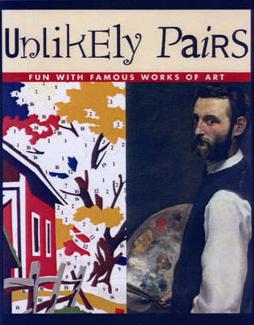
We also take a look at Unlikely Pairs by Bob Raczka to help inspire them to make their own juxtapositions.


I've done this project many times and am always surprised and impressed with the creative combinations- I've never seen the same pair twice! I have hundeds of art postcards I've collected over the years. Their task is to find a combination of images that when put together changes the context and meaning in an interesting and creative way. They each need to find their own pairs but they do a great job of collaborating and the conversations are rich. This is also a great way to work with art history! Here are a few examples of their unlikely pairs:


12.20.2010

hyperbolic crochet coral reef project

Our after school Talents class participated in an international project that combines math, craft, and environmentalism!


This was the first time using crochet for most of the students (grades 2-6) and they ended up doing an amazing job! I am super proud of them for a beautiful display of craftivism.


The Institute For Figuring first used the hyperbolic crochet technique to curate an exhibit, The Crochet Coral Reef Project, to bring attention to our coral reefs under environmental stress. Since then the small project has grown to an international collaborative project. There is currently an exhibit at the Smithsonian and we got special permission from the IFF to have our own display at New City School!


Hyperbolic crochet is made using a simple algorithm of increasing stitches to create the shapes you see here. These forms mimic what you might find in nature: lettuce, sea slugs, anemones, or coral.


12.10.2010

first grade pumpkin blanket


These lovely little pumpkins and colorful quilts are inspired by the The Pumpkin Blanket by Deborah Turney Zagwyn. This is a really beautiful story about a brave young girl, Clee, who gives up her quilt bit by bit to help protect the pumpkins in her garden from the frost.


I was so impressed by the heartfelt reaction of the first graders as I read this story. They were really moved by Clee’s choice and pointed out how kind she was. We talked about the special quilts, blankets, and stuffed animals we all have and shared our stories.


The first grade artists looked at real miniature pumpkins to model their own clay pumpkins from. They observed wabi sabi elements of their pumpkins and tried to include the imperfect and natural details that make the pumpkins so interesting to look at. After the clay was fired, they carefully collaged tissue paper in layers to make a vibrant colorful pumpkin!


Our pumpkins needed a blanket next. They used fabric squares backed with a special lining that sticks to the base fabric once ironed. The first graders used pattern, color, and storytelling to create original quilt designs. Each one is so creative and a beautiful reminder of the pumpkin blanket story of giving.